
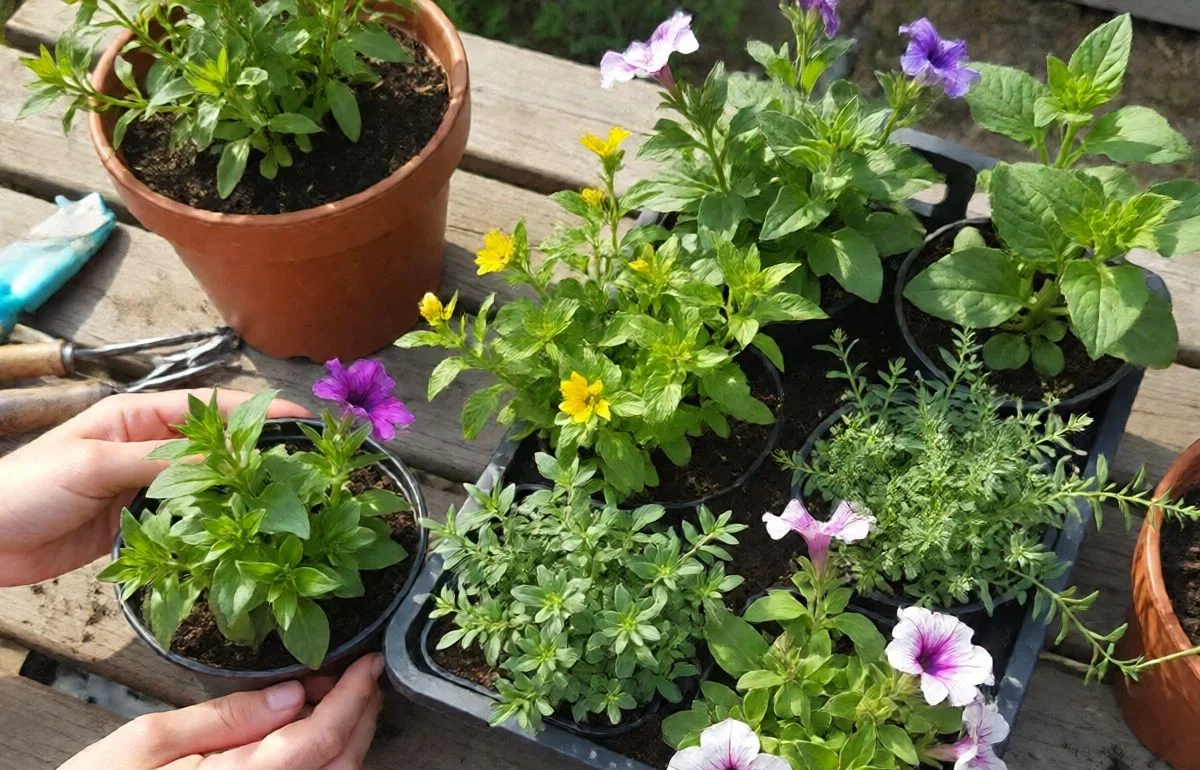

Are you ready to give your plants a fresh start? Knowing how to pot plants correctly can make all the difference in their growth and health.
Whether you’re a beginner or looking to improve your gardening skills, this guide will show you simple steps to pot your plants like a pro. Imagine your plants thriving, with vibrant leaves and strong roots, all because you took the right approach from the start.
Keep reading, and you’ll discover easy tips that will help your plants flourish and bring more life into your home.
Choosing The Right Pot
Choosing the right pot is key in how to potting plants successfully. The pot affects the plant’s growth, health, and appearance. Picking a suitable pot means understanding the material and size that match your plant’s needs. This helps with watering, root space, and overall plant care. Whether you are planting flowers in pots or learning how to plant flower containers, the right pot makes all the difference.
Material Options
Different pot materials offer various benefits for your plants. Choosing the right material depends on the plant type, location, and watering habits. Here are some popular pot materials:
- Terracotta: Porous and breathable, good for plants that like dry soil. It can dry out quickly, so water often.
- Plastic: Lightweight and affordable. Retains moisture well, ideal for plants needing constant moisture.
- Ceramic: Often glazed, holds moisture but can be heavy. Good for indoor plants and decorative use.
- Metal: Durable but heats up fast in sun. Best for shaded areas or indoor use.
- Wood: Natural look and good insulation for roots. Needs treatment to avoid rot.
Here is a quick comparison:
| Material | Water Retention | Weight | Best Use |
|---|---|---|---|
| Terracotta | Low | Medium | Plants needing dry soil |
| Plastic | High | Light | Most indoor and outdoor plants |
| Ceramic | Medium | Heavy | Indoor decorative plants |
| Metal | Low | Medium | Shaded or indoor plants |
| Wood | Medium | Medium | Outdoor plants with good drainage |
Knowing the pot material helps control moisture and temperature for your plants. It improves results in how to plant annuals in pots or perennials.
Table of Contents
Size Considerations
Choosing the right size pot affects plant growth and health. A pot too small limits root space and causes stress. A pot too large can hold too much water and cause root rot.
Here are key tips for size:
- Choose a pot 1-2 inches larger in diameter than the plant’s root ball.
- For how many plants per container, give each plant enough space to grow without crowding.
- Deeper pots suit plants with long roots; shallow pots fit plants with shallow roots.
- Ensure the pot has drainage holes to avoid water buildup.
Below is a simple size guide for common plants:
| Plant Type | Pot Diameter | Pot Depth | Plants per Container |
|---|---|---|---|
| Small annuals | 6-8 inches | 6-8 inches | 3-5 |
| Medium perennials | 10-12 inches | 8-10 inches | 1-2 |
| Large shrubs | 14-18 inches | 12-16 inches | 1 |
Correct pot size helps with proper watering and root growth. It supports healthy plants in how to plant flower containers or planting flowers in pots. Always pick pots that fit your plant’s needs to avoid problems.
Selecting Suitable Soil
Selecting suitable soil is a key step in how to potting plants. The right soil supports healthy roots, good drainage, and proper nutrient supply. Different plants need different soil types to grow well. Choosing the correct soil helps in planting flowers in pots and keeps plants thriving in their containers.
Soil Types
Understanding soil types is important for how to plant flower containers. There are three main soil types used in pots:
- Potting Mix: Light and fluffy, designed for container plants. It holds moisture but drains well.
- Garden Soil: Dense and heavy. Not ideal for pots because it can compact and block roots.
- Seed Starting Mix: Very light and fine, perfect for starting seeds but not for mature plants.
For most container planting, potting mix is the best choice. It contains peat moss, perlite, and sometimes compost. These ingredients keep the soil loose and aerated.
Here is a simple table comparing soil types for container planting:
| Soil Type | Best Use | Water Retention | Drainage |
|---|---|---|---|
| Potting Mix | Planting flowers in pots, annuals, vegetables | Moderate | Good |
| Garden Soil | Outdoor garden beds | High | Poor |
| Seed Starting Mix | Starting seeds and seedlings | Low | Excellent |
Choose soil based on the plant type and container size. For example, how many plants per container depends on root space and soil quality.
Amendments For Drainage
Good drainage is essential in how to plant annuals in pots. Soil that holds too much water can cause root rot. Amendments improve soil drainage and help roots breathe.
Common drainage amendments include:
- Perlite: White, lightweight particles that create air pockets.
- Vermiculite: Holds moisture but also improves aeration.
- Sand: Coarse sand helps water flow through soil faster.
- Bark Chips: Organic material that breaks down slowly, improving soil texture.
Mix these amendments with potting soil for better drainage and aeration. A typical mix might be:
- 3 parts potting soil
- 1 part perlite or sand
- Optional: 1 part compost for nutrients
For how to potting plants successfully, check soil moisture regularly. If soil stays soggy, add more drainage material. This step is vital for planting flowers in pots and preventing waterlogged roots.
Preparing The Pot
Preparing the pot is a key step in how to potting plants successfully. A well-prepared container supports healthy roots and strong plant growth. Before placing soil or plants inside, the pot needs cleaning and proper drainage setup. These steps prevent root rot and provide enough space for roots to grow. Whether planting flowers in pots or learning how to plant annuals in pots, preparation matters. It helps answer common questions like how many plants per container work best and ensures your plants thrive.
Cleaning The Container
Cleaning the pot removes old soil, bacteria, and pests. This step lowers the risk of diseases and helps new plants grow well. Start by emptying any leftover soil or plant material. Then, wash the container with warm water and mild soap. Use a brush to scrub the inside and outside thoroughly.
- Remove all dirt and debris from the pot’s surface.
- Scrub around drainage holes to clear blockages.
- Rinse well to remove soap residue.
For plastic or ceramic pots, disinfect by soaking in a solution of 1 part bleach to 9 parts water for 10 minutes. This kills harmful fungi and bacteria. After soaking, rinse the pot with clean water and let it dry completely. Avoid using harsh chemicals that can damage the pot or harm plants.
| Pot Type | Cleaning Method | Disinfection |
|---|---|---|
| Plastic | Soap and water, scrub well | Bleach solution soak |
| Ceramic | Soap and water, gentle scrub | Bleach solution soak |
| Terracotta | Dry brush, water rinse only | Avoid bleach; use vinegar rinse |
Clean pots help answer how to plant flower containers properly. They create a healthy base for your plants and reduce problems later on.
Adding Drainage Layers
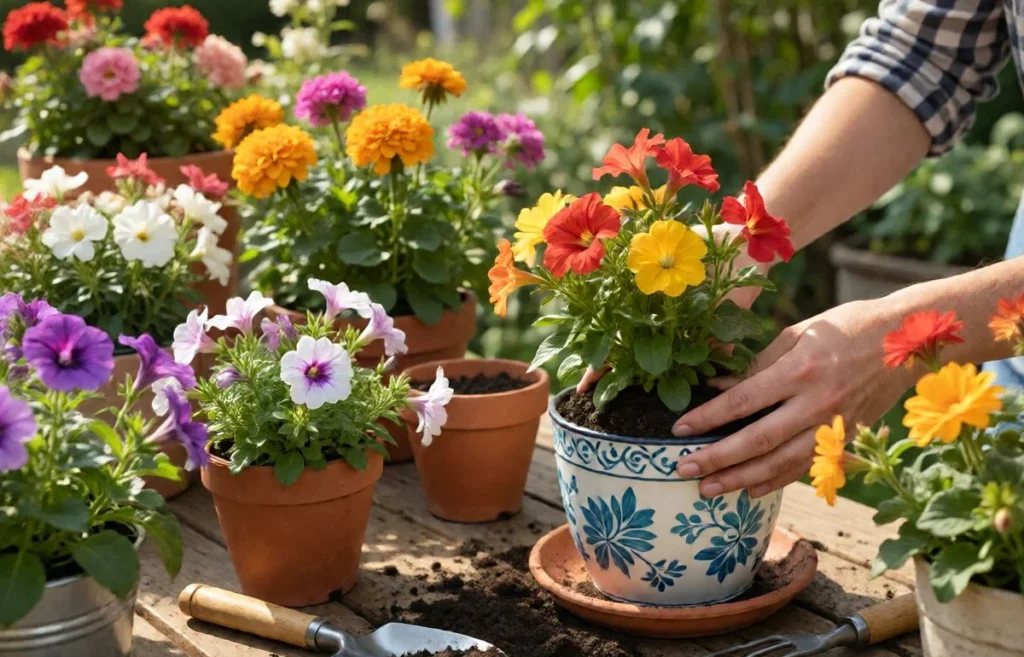
Drainage is crucial in how to potting plants. It stops water from pooling at the roots, which can cause root rot. Pots without drainage holes need special care to avoid overwatering. Start by placing a layer at the bottom of the pot to help water flow out.
Common materials for drainage layers include:
- Gravel or small stones
- Broken pottery pieces
- Expanded clay pellets
Spread 1 to 2 inches of drainage material evenly at the bottom. This layer keeps soil from blocking drainage holes and allows excess water to escape.
| Material | Benefits | Drawbacks |
|---|---|---|
| Gravel | Easy to find, good drainage | Can be heavy, may compact soil |
| Broken Pottery | Recycles old pots, good airflow | Sharp edges, careful handling |
| Clay Pellets | Lightweight, reusable | More expensive than others |
After adding the drainage layer, place a thin mesh or coffee filter over it. This stops soil from mixing with the drainage material. Then, add potting soil and plant your flowers or annuals. Proper drainage helps answer how many plants per container will thrive by preventing water stress.
Transplanting The Plant
Transplanting the plant is an important step in how to potting plants successfully. It allows plants to grow healthier by giving them more space and fresh soil. This process helps avoid root crowding and provides nutrients for better growth. Whether you are planting flowers in pots or learning how to plant flower containers, transplanting needs care and attention. It is also key to know how many plants per container are ideal to prevent overcrowding. Understanding the proper way to move plants will improve their chances of thriving, especially for those learning how to plant annuals in pots.
Removing From Original Pot
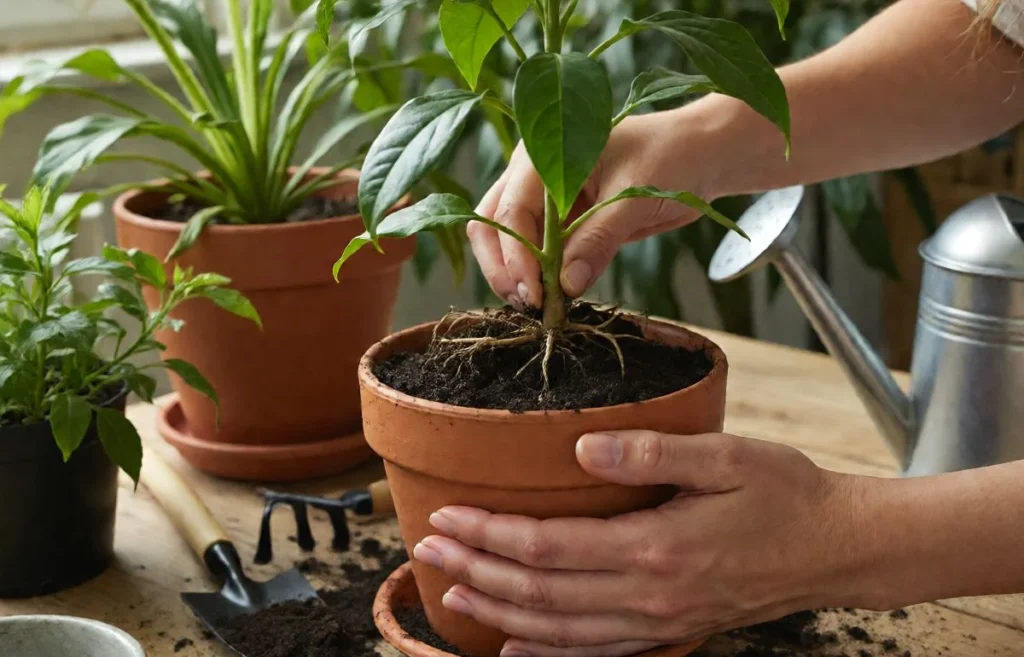
Start by watering the plant lightly a few hours before transplanting. This softens the soil and makes it easier to remove the plant without damage. Gently hold the base of the plant near the soil surface.
- Turn the pot sideways and tap the sides softly to loosen the soil.
- Carefully slide the plant out by tipping the pot or pulling the root ball.
- If the plant sticks, use a small tool to loosen the edges of the pot.
Check the roots once removed. Healthy roots should be white or light tan and firm. Avoid plants with black or mushy roots. If roots are tightly wrapped around the soil, tease them gently to encourage outward growth. Removing the plant carefully helps avoid root breakage and transplant shock, essential for planting flowers in pots.
| Step | Action | Tip |
|---|---|---|
| 1 | Water plant lightly | Do this a few hours before transplanting |
| 2 | Loosen soil by tapping pot | Tap gently to avoid damage |
| 3 | Slide plant out carefully | Hold base, avoid pulling stems |
| 4 | Check and tease roots if needed | Remove dead roots and untangle |
Positioning In New Pot
Choose a pot that fits the plant’s size and allows room for growth. The new pot should have drainage holes to avoid waterlogging. Add a layer of fresh potting soil at the bottom. This provides a base for the roots to settle into.
- Place the plant in the center of the new pot.
- Ensure the top of the root ball sits about an inch below the pot rim.
- Fill the space around the roots with potting soil.
- Press soil gently to remove air pockets but do not compact it too hard.
Water the plant well after positioning. This helps the soil settle and roots to establish. Proper positioning is crucial in how to plant flower containers. It also affects how many plants per container you can add without crowding. Leave enough space between plants for airflow and growth. This advice applies to how to plant annuals in pots to keep them healthy and vibrant.
| Positioning Step | Purpose |
|---|---|
| Choose pot with drainage | Prevents root rot from excess water |
| Place plant center | Ensures balanced growth and stability |
| Fill soil around roots | Supports roots and removes air pockets |
| Water thoroughly | Helps soil settle and roots absorb moisture |
Watering Techniques
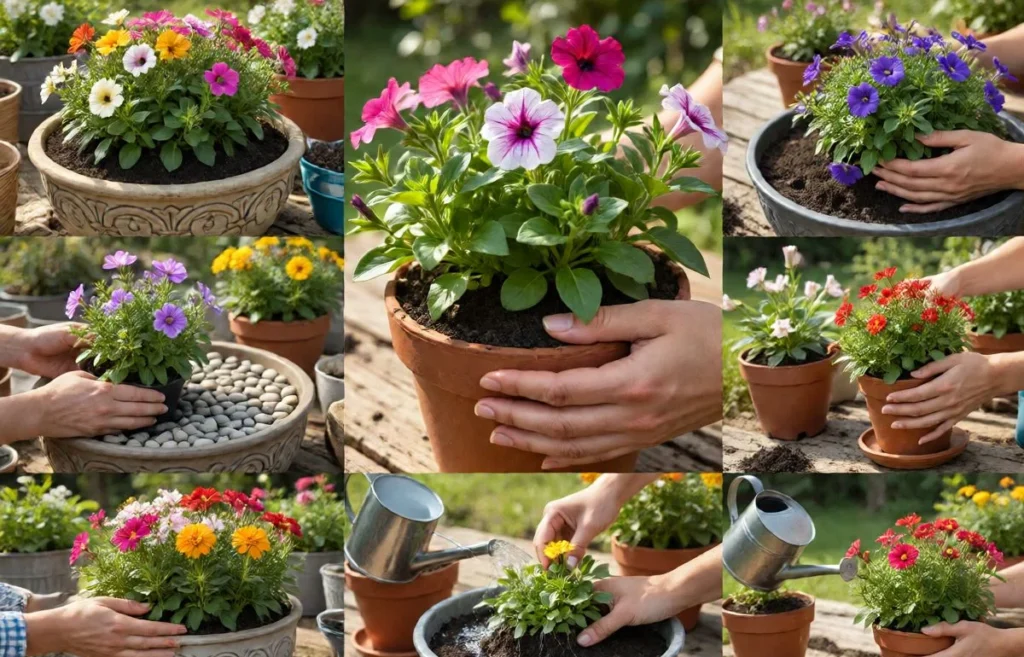
Watering techniques play a crucial role in how to potting plants successfully. Proper watering ensures the roots get enough moisture without drowning. It supports healthy growth and helps prevent root rot or drought stress. Whether planting flowers in pots or learning how to plant flower containers, understanding watering basics is key. Different plants and pot sizes need different care. Knowing how many plants per container also affects how often to water. This section covers the essentials from initial watering to ongoing care for your potted plants.
Initial Watering
After planting flowers in pots or learning how to plant flower containers, the first watering is vital. It helps settle the soil around the roots and removes air pockets. Use enough water to soak the soil evenly but avoid flooding.
- Water deeply: Pour water slowly until you see it drain from the pot’s holes.
- Check soil moisture: Stick your finger about an inch into the soil. It should feel damp but not soggy.
- Use room temperature water: Cold water can shock the roots.
Here is a quick guide for initial watering amounts based on pot size and how many plants per container:
| Pot Size | Number of Plants | Water Amount (cups) |
|---|---|---|
| 6-inch pot | 1-2 | 1-2 cups |
| 8-inch pot | 2-3 | 2-3 cups |
| 10-inch pot | 3-5 | 3-4 cups |
Remember, overwatering at this stage can cause root rot. Avoid letting water pool on the surface. Proper drainage is essential for healthy roots.
Ongoing Care
Ongoing watering care depends on plant type, container size, and weather conditions. Learning how to plant annuals in pots means knowing their watering needs change weekly. Check soil moisture regularly to decide when to water.
- Water frequency: Most potted plants need watering every 2-3 days.
- Adjust for weather: Hot, dry days require more water; cooler weather less.
- Water in the morning: Helps avoid fungal problems and reduces evaporation.
To help track watering needs, use this simple checklist:
- Touch the soil 1 inch deep.
- If dry, water thoroughly.
- Ensure excess water drains out.
- Remove standing water from saucers.
- Note plant type and adjust frequency.
Watering too little causes wilting and poor growth. Too much water leads to root rot and yellow leaves. Balancing water keeps plants healthy and thriving in pots.
Providing Proper Light
Providing proper light is essential for healthy plants when learning how to potting plants. Light helps plants make food through photosynthesis. Without enough light, plants grow weak and may die. Different plants need different light amounts. Understanding this helps you keep your potted plants strong and beautiful. This guide covers light requirements and adjusting placement to give your plants the best light.
Light Requirements
Plants need various light levels depending on their type. Some plants thrive in bright, direct sunlight, while others grow well in low light. Knowing these needs helps when planting flowers in pots or figuring out how many plants per container to place.
Here are common light needs:
- Full Sun: 6+ hours of direct sunlight daily. Ideal for many annuals and flowering plants.
- Partial Sun/Shade: 3-6 hours of direct sun or filtered light. Good for plants that need some sun but not harsh midday rays.
- Shade: Less than 3 hours of direct sun. Perfect for shade-loving plants or indoor pots far from windows.
| Plant Type | Light Requirement | Example Plants |
|---|---|---|
| Sun-loving | Full sun (6+ hours) | Petunias, Marigolds, Geraniums |
| Partial shade | 3-6 hours sun or filtered light | Impatiens, Begonias, Coleus |
| Shade | Less than 3 hours sun | Ferns, Snake plants, Peace lilies |
Understanding these requirements helps when learning how to plant flower containers or how to plant annuals in pots. Too much sun can burn leaves, while too little stunts growth. Choose plants that match your light conditions for the best results.
Adjusting Placement
Placement is key to giving plants proper light. Pots are portable. Move them to follow the sun or shield them from harsh rays. Check your plants daily for signs of too much or too little light.
Here are tips for adjusting placement:
- Observe the light pattern in your space throughout the day.
- Place sun-loving plants near south-facing windows or outdoors in full sun.
- Move partial shade plants to east or west windows with morning or afternoon sun.
- Keep shade plants away from direct sun, in north-facing rooms or shaded patios.
- Rotate pots weekly to ensure even light exposure on all sides.
Watch your plants closely. Signs of poor light include:
- Yellowing leaves (too much sun)
- Leggy, stretched growth (too little sun)
- Leaf drop or wilting
Adjust pots as needed. Proper light helps plants stay healthy and bloom well. This knowledge supports your efforts in how to potting plants and helps answer questions like how many plants per container to keep each one healthy.
Maintaining Plant Health
Maintaining plant health is essential after learning how to potting plants correctly. Healthy plants grow stronger, bloom better, and live longer. Proper care helps avoid common problems like nutrient loss and pests. Whether planting flowers in pots or learning how to plant flower containers, you must keep your plants healthy. Knowing how many plants per container to use affects their health too. This section covers key tips to keep your plants thriving.
Fertilizing Schedule
Fertilizing is crucial for plant growth, especially for how to plant annuals in pots. Potted plants use up nutrients faster than garden soil. Follow a regular fertilizing schedule to replace these nutrients. Too little fertilizer can stunt growth, while too much can harm roots.
Here is a simple fertilizing guide for common potted plants:
| Plant Type | Fertilizer Type | Frequency | Notes |
|---|---|---|---|
| Flowering Annuals | Water-soluble balanced (10-10-10) | Every 2 weeks | Apply after watering |
| Houseplants | Slow-release or liquid | Monthly | Reduce in winter |
| Succulents | Low nitrogen fertilizer | Every 6 weeks | Use diluted solution |
Keep these points in mind:
- Fertilize during active growth phases only.
- Do not fertilize dry soil; water plants first.
- Adjust frequency based on plant response.
Pest Prevention
Pests can ruin your hard work on planting flowers in pots. Preventing pests keeps plants healthy and strong. Start by inspecting plants regularly for signs of bugs or damage. Early detection stops infestations from spreading. Use clean soil and pots when learning how to potting plants to reduce pest risks.
Here are simple steps for pest prevention:
- Choose healthy plants free from pests.
- Use insecticidal soap or neem oil as a natural spray.
- Keep the area clean and remove dead leaves.
- Avoid overwatering, which attracts pests.
- Quarantine new plants before adding them to your collection.
Common pests and how to spot them:
| Pest | Signs | Control Method |
|---|---|---|
| Aphids | Sticky residue, curled leaves | Spray with water or insecticidal soap |
| Spider Mites | Fine webbing, yellow spots | Increase humidity, use neem oil |
| Mealybugs | White cottony masses | Remove by hand, apply insecticidal soap |
Following these pest prevention tips ensures your plants stay healthy. Proper care supports your success in how many plants per container and how to plant flower containers effectively.
Frequently Asked Questions
What Materials Do I Need For Potting Plants?
You need pots, potting soil, a small shovel, and water. Good soil is key for healthy plants. Choose pots with drainage holes to avoid water buildup.
How Do I Choose The Right Pot Size?
Pick a pot slightly larger than the plant’s root ball. Too big pots hold extra water, causing root rot. Small pots restrict root growth and stunt the plant.
What Type Of Soil Is Best For Potting Plants?
Use potting mix made for container plants. It drains well and has nutrients. Garden soil is too dense and may cause poor drainage.
How Often Should I Water Potted Plants?
Water when the top inch of soil feels dry. Avoid overwatering to prevent root rot. Plants in small pots usually need more frequent watering.
Can I Reuse Old Pots For New Plants?
Yes, but clean them well first. Remove old soil and wash with mild soap. This stops diseases and pests from spreading.
How Do I Prevent Pests In Potted Plants?
Keep plants clean and check leaves often. Use natural sprays like neem oil if pests appear. Avoid overwatering, which attracts bugs.
When Is The Best Time To Repot Plants?
Repot during the growing season, usually spring or early summer. This helps plants recover quickly. Avoid repotting in winter when plants rest.
Conclusion
Potting plants is simple and fun with the right steps. Choose a good pot and fresh soil. Gently place the plant and cover its roots well. Water it just enough to keep soil moist. Watch your plant grow healthy and strong.
Enjoy the beauty and freshness it brings to your space. Potting helps plants thrive and makes gardening easy. Give your plants care and they will reward you. Try potting your own plants and see the joy.