
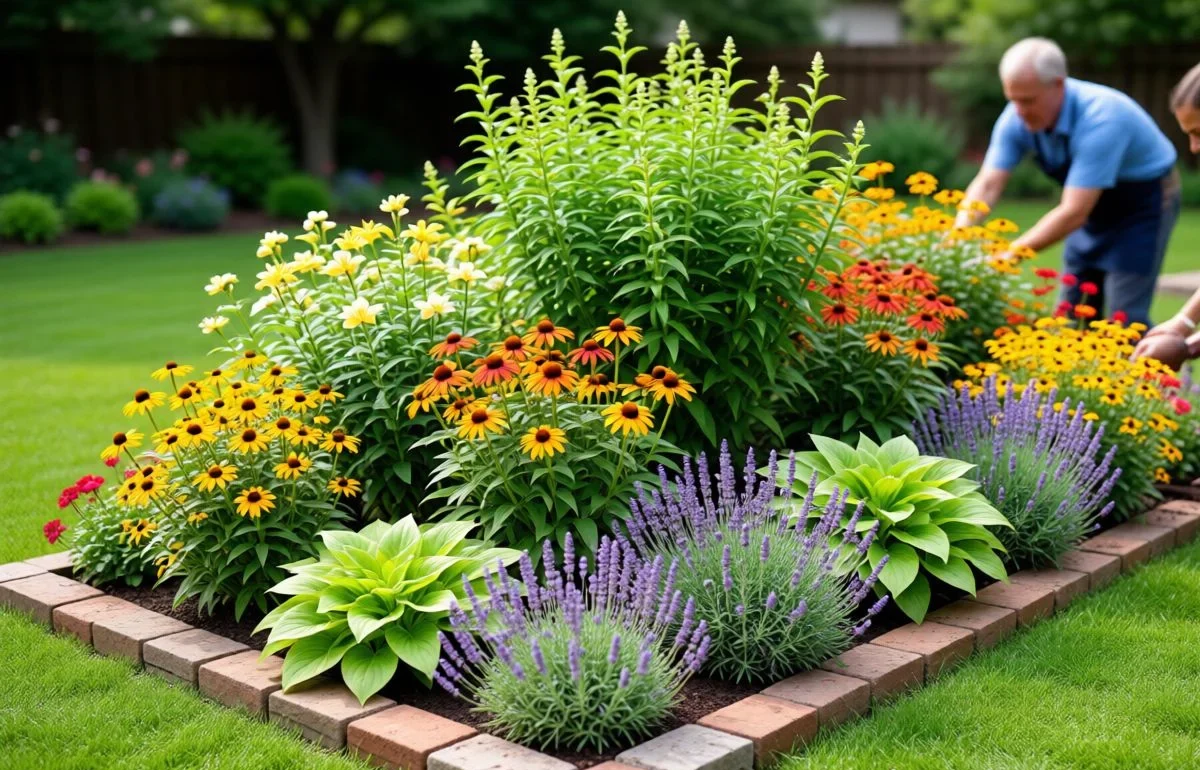

Are you ready to transform your outdoor space into a vibrant, welcoming haven? Landscape design with flowers is one of the easiest and most effective ways to add color, life, and charm to your yard.
Imagine stepping outside and being greeted by bursts of bright blooms that lift your mood and impress your guests. Whether you want a peaceful retreat or a lively garden full of energy, the right flower choices can make all the difference.
Keep reading to discover simple tips and creative ideas that will help you design a stunning landscape filled with beautiful flowers you’ll love year after year.
Choosing Flower Types
Landscape design with flowers brightens any outdoor space. Choosing flower types is a key step. The right flowers create beauty and harmony in your garden. Simple flower bed ideas start with picking flowers that suit your climate and soil. Flower bed decor ideas need flowers with different colors and heights. Flower bed decoration ideas often include a mix of annuals and perennials. Flower bed ideas with perennials bring long-lasting blooms and easy care.
Understanding Climate And Soil
Choosing flowers that thrive in your local climate ensures healthy growth. Some flowers prefer full sun, others partial shade. Soil type also matters—sandy, clay, or loam affects flower choice.
- Check sunlight exposure: full sun (6+ hours), partial shade (3-6 hours), or shade (less than 3 hours).
- Test soil: sandy soils drain fast, clay soils hold water, loam is balanced.
- Choose flowers suited for these conditions.
Annuals Vs. Perennials
Annuals live one season but bloom brightly. Perennials return every year with less effort.
| Type | Bloom Time | Care Level | Example Flowers |
|---|---|---|---|
| Annuals | One season | Medium | Marigolds, Petunias, Zinnias |
| Perennials | Multiple years | Low to Medium | Daylilies, Coneflowers, Hostas |
Colors And Bloom Times
Choosing flowers with varied colors adds charm and contrast. Planning for different bloom times keeps your garden colorful longer.
- Select colors that match your style or existing plants.
- Mix early, mid, and late bloomers for continuous flowers.
- Use soft pastels or bold hues depending on your mood.
Height And Spacing
Flower height affects your garden’s look and flower bed decor ideas.
- Tall plants go in the back or center.
- Medium flowers fill the middle space.
- Short flowers or ground covers stay in front.
- Space flowers to avoid crowding and allow airflow.
Table of Contents
Color Schemes For Gardens
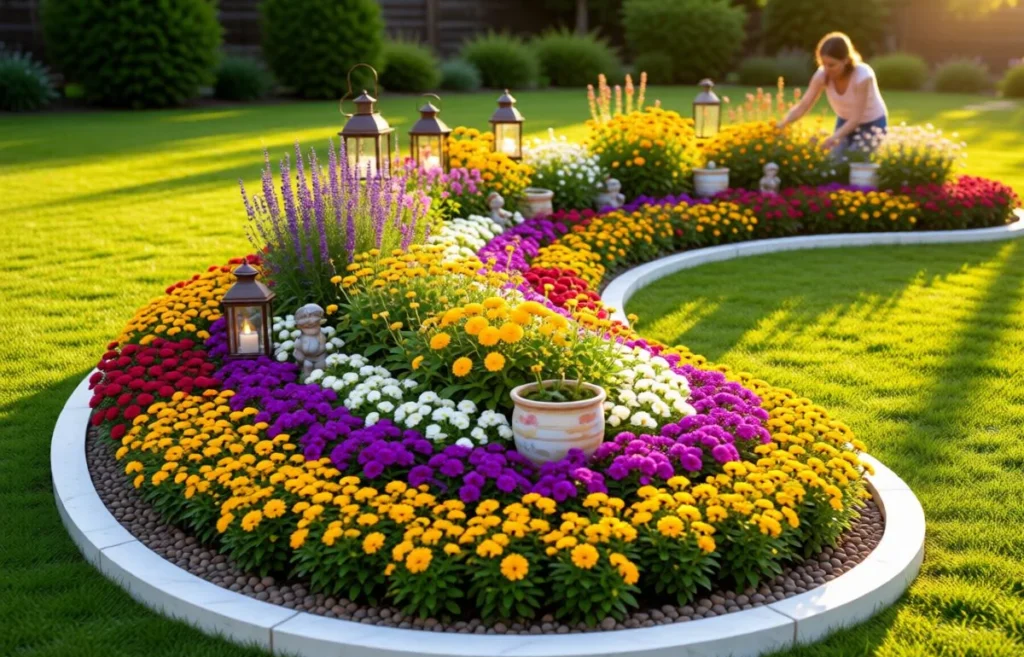
Landscape design with flowers creates vibrant and inviting outdoor spaces. Choosing the right color schemes for gardens enhances the beauty of simple flower bed ideas and flower bed decor ideas. Color harmony in flower bed decoration ideas can make your garden feel calm, lively, or dramatic. Using flower bed ideas with perennials ensures lasting color and structure year after year.
Complementary Color Schemes
Complementary colors sit opposite each other on the color wheel. This scheme creates strong contrast and brightens garden spaces.
- Red and green: Classic and bold combination.
- Blue and orange: Energetic and eye-catching.
- Purple and yellow: Cheerful and vibrant.
Use complementary colors in flower bed decor ideas to make flowers stand out vividly.
Analogous Color Schemes
Analogous colors sit next to each other on the color wheel. This scheme produces a harmonious and soothing effect.
- Blue, blue-green, and green: Cool and calming.
- Red, red-orange, and orange: Warm and inviting.
- Yellow, yellow-green, and green: Fresh and lively.
Perfect for simple flower bed ideas that aim for a natural, blended look.
Monochromatic Color Schemes
Monochromatic schemes use variations of a single color. These designs add depth and elegance without overwhelming the eye.
- Choose one color family, like pink or purple.
- Mix light, medium, and dark shades.
- Add different flower shapes and textures.
Monochromatic flower bed ideas with perennials create a graceful and timeless garden.
Neutral Color Schemes
Neutral colors include whites, creams, grays, and soft browns. These colors provide a calm and sophisticated backdrop.
| Neutral Colors | Effect in Garden |
|---|---|
| White | Brightens and opens space |
| Cream | Soft and warm |
| Gray | Modern and cool |
| Brown | Earthy and grounding |
Use neutral colors in flower bed decor ideas to balance brighter hues or create peaceful zones.
Seasonal Flower Planning
Seasonal flower planning is key to successful landscape design with flowers. It helps keep your garden colorful all year round. Picking the right flowers for each season makes your flower beds look fresh and lively. With simple flower bed ideas, you can plan flowers that bloom in spring, summer, fall, and winter. This approach improves flower bed decor ideas and flower bed decoration ideas by adding variety and interest. Using flower bed ideas with perennials also saves time and effort each season.
Spring Flower Choices
Spring brings bright colors and fresh blooms. Choose flowers like tulips, daffodils, and hyacinths. These bulbs bloom early and add vibrancy to your garden. Simple flower bed ideas include mixing these spring flowers with early perennials for longer color.
- Tulips: Bright reds, pinks, and yellows.
- Daffodils: Cheerful yellow and white blooms.
- Hyacinths: Fragrant flowers in purple, pink, and white.
Summer Flower Planning
Summer requires flowers that handle heat well. Annuals like marigolds, zinnias, and petunias are perfect. They bloom all summer and add bold colors. Combine them with perennials like coneflowers or black-eyed Susans for lasting appeal.
- Plant marigolds for bright orange and yellow blooms.
- Use zinnias for a splash of pinks and reds.
- Add petunias for variety and ground cover.
Fall Flower Bed Ideas
Fall adds warm tones to flower beds. Chrysanthemums and asters are top choices. They thrive in cooler weather and offer rich reds, purples, and golds. Use ornamental grasses or late-blooming perennials for texture.
| Flower | Color | Bloom Time |
|---|---|---|
| Chrysanthemums | Red, Gold, Purple | Late Summer to Fall |
| Asters | Purple, Blue, White | Fall |
Winter Flower Bed Decoration Ideas
Winter flower beds need hardy plants. Pansies and hellebores survive cold weather and add color. Evergreen shrubs or winter berries enhance flower bed decoration ideas by providing structure and interest.
- Pansies: Cold-tolerant flowers in purple, yellow, and white.
- Hellebores: Also called Christmas roses, bloom in winter.
- Evergreens: Add year-round greenery and contrast.
Flower Bed Layouts
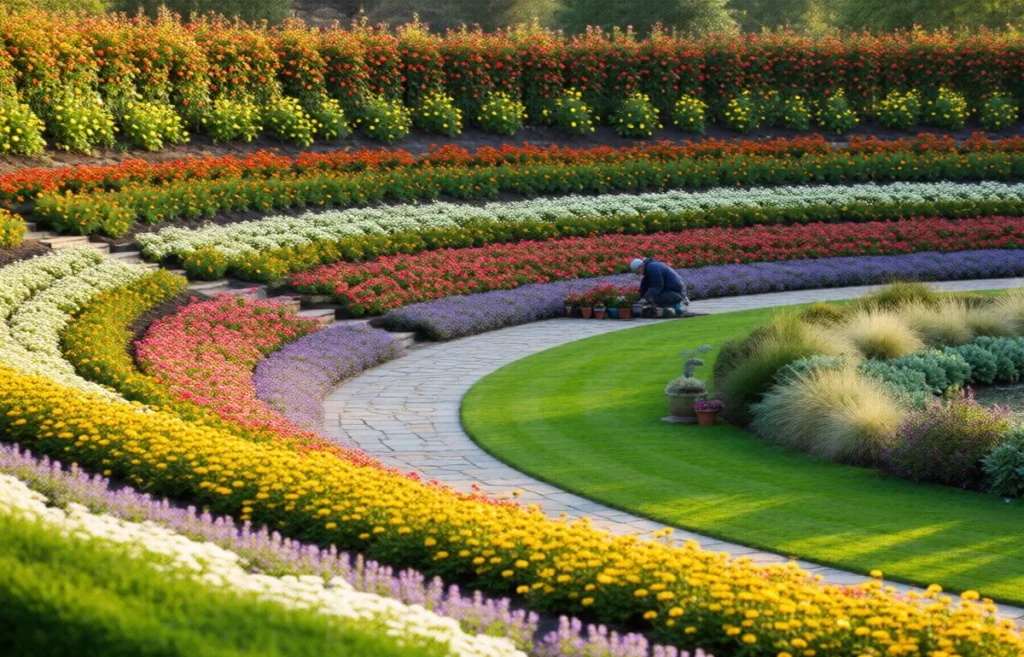
Landscape design with flowers brings life and color to any outdoor space. Flower bed layouts play a key role in making gardens look stunning and well-organized. Choosing the right layout helps highlight your plants’ beauty and creates a welcoming atmosphere. Simple flower bed ideas can fit any garden size and style, making it easy to start your flower bed decoration ideas.
Classic Symmetrical Layout
This layout uses balance and even spacing. Plants are placed in mirror-image patterns on each side of a central point.
- Creates order: perfect for formal gardens.
- Easy to maintain: plants grow evenly.
- Best for: flower bed ideas with perennials that have uniform height.
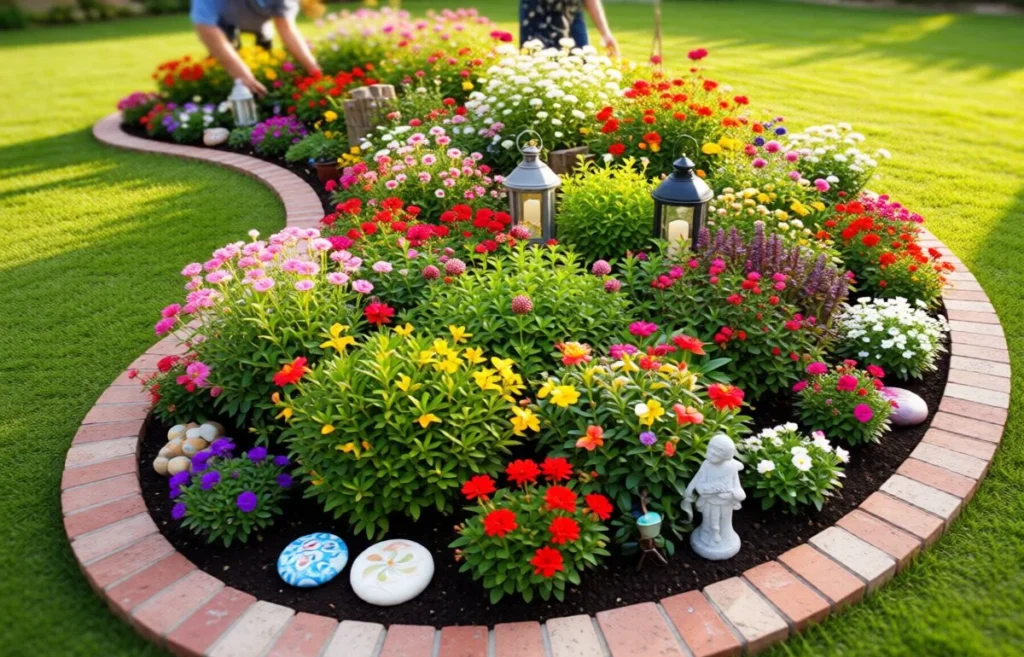
Curved Flower Beds
Curved beds add softness and flow to your garden design. They break the straight-line look and add interest.
- Use low-growing flowers along edges.
- Place taller plants towards the back or center.
- Good for flower bed decor ideas that want a natural feel.
Mixed Planting Layout
This layout blends different flower types and heights for a wild, colorful look. It suits gardens that want a casual style.
- Combine perennials, annuals, and shrubs.
- Use contrasting colors and textures.
- Ideal for flower bed decoration ideas that aim for variety.
Raised Flower Beds
Raised beds improve soil quality and drainage. They also create clear borders for your flowers.
- Build with wood, stone, or brick.
- Fill with rich soil for healthy plants.
- Perfect for simple flower bed ideas in small or uneven spaces.
| Layout Type | Best Use | Key Feature |
|---|---|---|
| Classic Symmetrical | Formal Gardens | Balanced, Even Spacing |
| Curved Beds | Natural Flow | Soft, Rounded Edges |
| Mixed Planting | Casual, Colorful | Variety of Plants and Heights |
| Raised Beds | Small or Uneven Spaces | Improved Soil and Borders |
Combining Flowers With Foliage
Landscape design with flowers offers endless ways to create vibrant and inviting outdoor spaces. Combining flowers with foliage brings depth and texture to simple flower bed ideas. This mix enhances flower bed decor ideas by balancing bright blooms with lush greenery. Using flower bed decoration ideas that blend foliage and flowers creates a natural, full look. Flower bed ideas with perennials become more interesting when paired with different types of leaves and plants.
Enhancing Visual Appeal With Contrasting Textures
Combining flowers with foliage adds visual contrast. Soft, delicate petals stand out against bold, structured leaves. This contrast draws the eye and makes flower beds more engaging. For example, pairing feathery ferns with bright daisies creates a lively display.
- Soft flowers: petunias, daisies, cosmos
- Bold foliage: hostas, ferns, ornamental grasses
Using different textures helps simple flower bed ideas feel dynamic and fresh.
Balancing Color And Shape
Foliage helps balance bright flower colors. Green leaves soften intense blooms and create harmony. Shapes of leaves also add interest. Round leaves can contrast with spiky flowers, while broad leaves give a solid background.
| Flower | Foliage | Effect |
|---|---|---|
| Red tulips | Long, narrow grass blades | Sharp contrast, highlights tulip color |
| Yellow marigolds | Soft, rounded hosta leaves | Creates balance and calm |
| Blue hydrangeas | Dark green, textured ivy | Adds depth and richness |
Improving Plant Health And Growth
Foliage plants help protect flowers. They keep soil moist and reduce weeds. Shade from leaves can prevent flowers from overheating. This support helps flower bed decoration ideas last longer. Combining flowers with foliage makes a stronger garden environment.
- Shade lowers soil temperature.
- Leaves reduce water evaporation.
- Dense foliage blocks weeds.
Healthy plants mean more vibrant colors and longer blooming periods.
Maintenance Tips For Flower Gardens
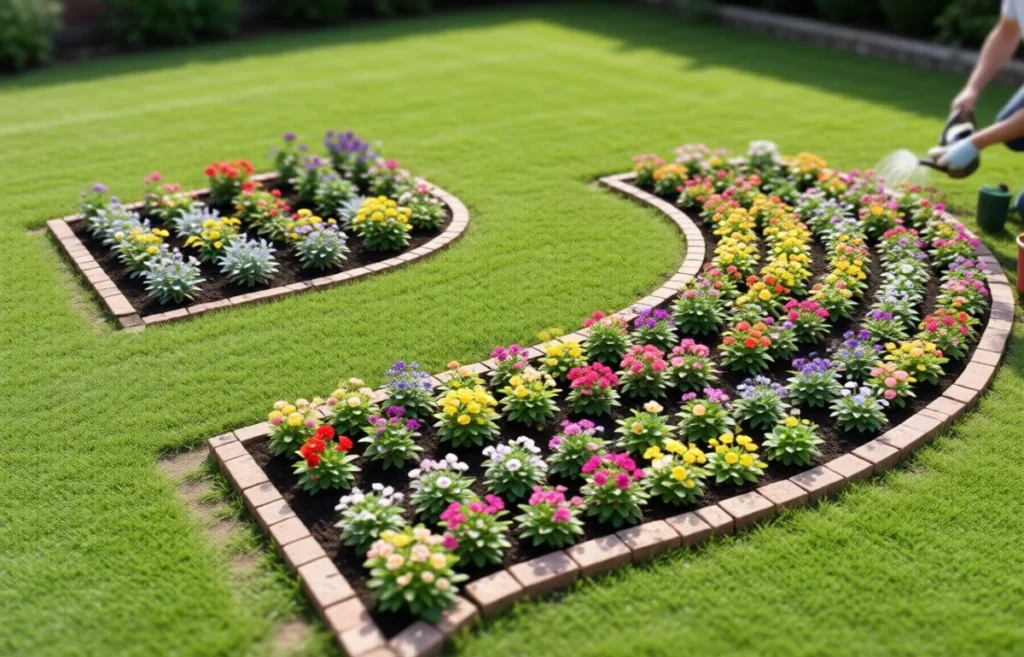
Landscape design with flowers adds color and life to any outdoor space. It creates a welcoming look using simple flower bed ideas and flower bed decor ideas. Maintaining these flower beds keeps your garden fresh and vibrant. Proper care improves flower bed decoration ideas and flower bed ideas with perennials, making your garden last longer and look better.
Watering Techniques For Healthy Flowers
Consistent watering helps flowers grow strong. Early morning is the best time to water. This reduces evaporation and keeps roots moist all day. Avoid watering leaves to prevent disease.
- Water deeply, not frequently.
- Use drip irrigation or soaker hoses.
- Check soil moisture before watering.
Soil Care And Fertilizing
Good soil supports flower growth. Test soil to know its needs. Use organic compost to improve soil structure and nutrients. Fertilize flowers during the growing season with a balanced fertilizer.
| Type of Fertilizer | Best For | Frequency |
|---|---|---|
| Slow-release | Perennials and annuals | Every 2-3 months |
| Liquid | Fast growth | Every 2 weeks |
Pruning And Deadheading Tips
Pruning shapes plants and removes dead parts. Deadheading stops flowers from wasting energy on old blooms. It encourages new blooms and keeps the garden tidy.
- Cut back spent flowers just above a leaf node.
- Remove damaged or diseased stems.
- Use clean, sharp tools to avoid harming plants.
Controlling Weeds And Pests
Weeds steal water and nutrients from flowers. Pull weeds regularly to stop them from spreading. Use mulch to block weed growth and keep soil moist.
- Inspect plants for pests weekly.
- Use natural pest control like ladybugs.
- Apply insecticidal soap if necessary.
Incorporating Flowers In Hardscapes
Landscape design with flowers brings vibrant color and life to outdoor spaces. Incorporating flowers in hardscapes creates a beautiful contrast between stone, wood, or concrete and soft plant textures. This blend enhances curb appeal and personalizes gardens.
Hardscapes like patios, walkways, and retaining walls offer unique spots for simple flower bed ideas. Flowers soften tough edges and add charm to solid surfaces. Choosing the right flower bed decor ideas helps balance the space and draws attention to garden features.
Using flower bed decoration ideas around hardscapes allows easy access for care and watering. Flower bed ideas with perennials provide lasting color and reduce maintenance near pathways and seating areas. This design approach combines function and beauty.
Using Planters And Containers
Planters and containers are perfect for adding flowers to hardscape areas. They allow flexibility and can be moved to suit the season or style.
- Choose containers that match the hardscape material for a unified look.
- Mix perennial and annual flowers for continuous bloom throughout the year.
- Group containers in odd numbers for visual interest.
Creating Flower Beds Along Edges
Flower beds along hardscape edges create natural boundaries and soften harsh lines.
- Remove weeds and loosen soil near the hardscape.
- Plant perennials like lavender or coneflowers for long-lasting color.
- Add mulch to retain moisture and reduce weeds.
This technique combines flower bed decor ideas with structure to highlight paths and patios.
Integrating Flowers Between Pavers
Flowers can grow between pavers to add charm and reduce empty spaces.
| Flower Type | Benefits | Care Tips |
|---|---|---|
| Creeping Thyme | Low-growing, fragrant, attracts bees | Needs full sun, light watering |
| Irish Moss | Soft texture, tolerates foot traffic | Partial shade, moist soil |
| Blue Star Creeper | Bright flowers, spreads quickly | Partial sun, regular watering |
These options fit well into tight spaces and add delicate color to stone areas.
Frequently Asked Questions
What Flowers Are Best For Landscape Design?
Choose flowers that suit your climate and soil type. Perennials like daylilies and coneflowers are popular choices. They offer color and require less care.
How Can Flowers Improve Landscape Aesthetics?
Flowers add color, texture, and life to any outdoor space. They create focal points and soften hard landscape features. Using different flower heights adds depth.
What Is The Best Way To Arrange Flowers In A Garden?
Group flowers by color and height for a balanced look. Place taller plants in the back and shorter ones in front. Mixing bloom times keeps the garden colorful longer.
How Often Should I Water Flowers In My Landscape?
Water flowers deeply once or twice a week, depending on weather. Early morning watering helps reduce evaporation. Avoid overwatering to prevent root problems.
Can Flowers Attract Beneficial Insects To My Garden?
Yes, flowers like marigolds and lavender attract bees and butterflies. These insects help pollinate plants and control pests naturally. This keeps your garden healthy.
What Soil Preparation Is Needed For Planting Flowers?
Loosen the soil and add compost to improve nutrients and drainage. Flowers grow best in well-drained, fertile soil. Test soil pH to match flower needs.
How Do I Maintain Flower Beds In Landscape Design?
Remove weeds regularly to reduce competition for nutrients. Deadhead spent blooms to encourage new flowers. Mulching helps retain moisture and keeps weeds down.
Conclusion
Flower landscaping adds color and life to any outdoor space. Choose plants that fit your climate and soil. Mix different flower shapes and sizes for interest. Keep your garden healthy with regular care and watering. Flowers attract birds and butterflies, making your yard lively.
Simple planning helps create a beautiful, inviting garden. Enjoy the beauty and peace that flowers bring daily. Start small and watch your garden grow over time. A flower-filled landscape makes every day brighter and happier.